Why companies choose Julius over Deepnote
Julius vs. Deepnote: How do they compare?
Data analysis without the code. Julius uses AI to do the work for you, making powerful insights accessible to everyone.
Leading companies choose Julius


AI designed for advanced data analysis
Beyond traditional notebooks — Julius turns complex data analysis into simple conversations, no coding required.
More data work gets done with Julius
90%
of users report increased productivity in the first month
80%
of teams say Julius makes data analysis more accessible
50%
faster in pulling data insights compared to other tools
3 reasons why teams choose Julius over Deepnote
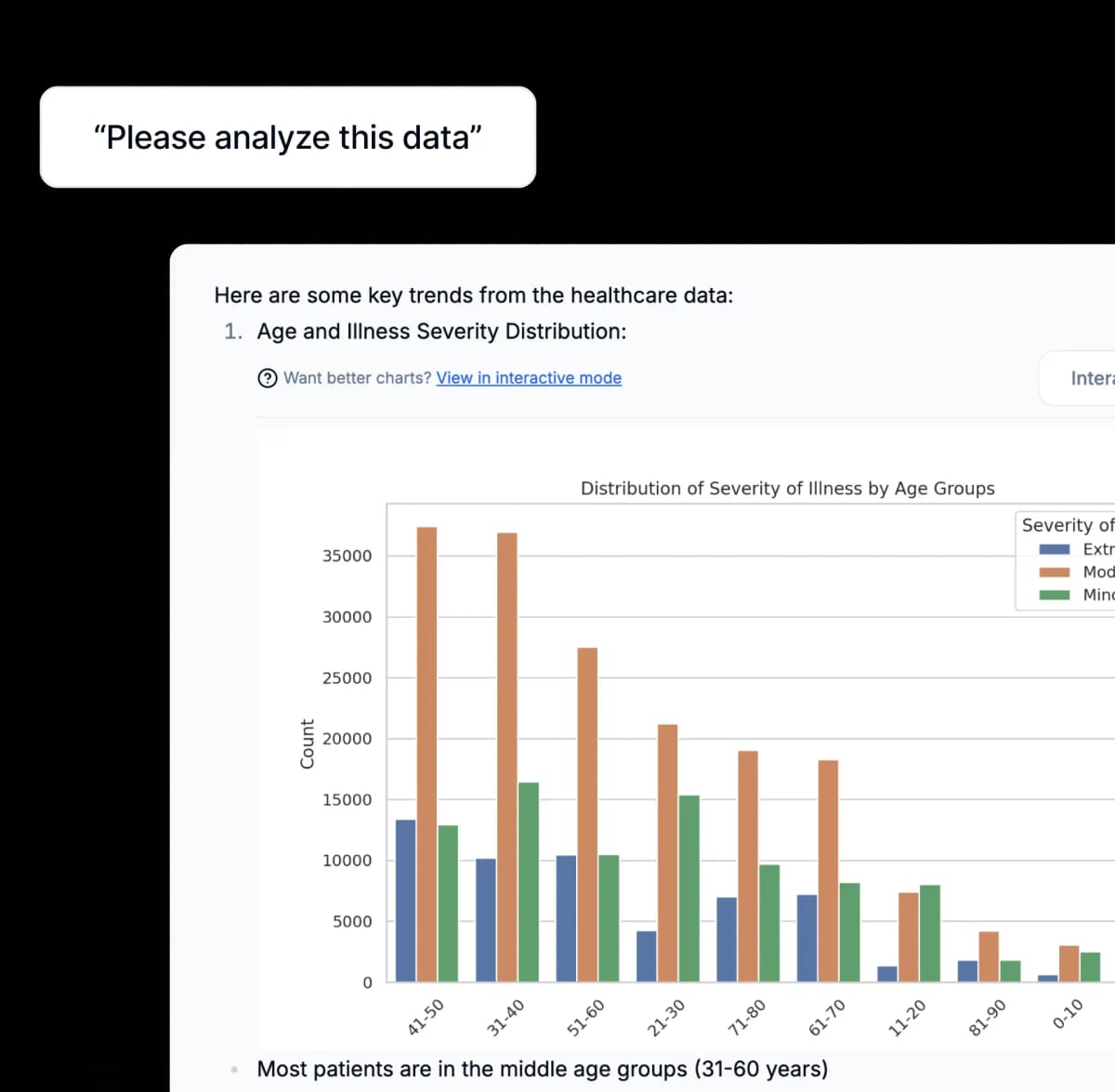
Turn raw data into actionable insights
Instantly transform datasets into interactive visualizations—no coding required. With Julius, you can visualize trends, uncover patterns, and make confident decisions in record time.
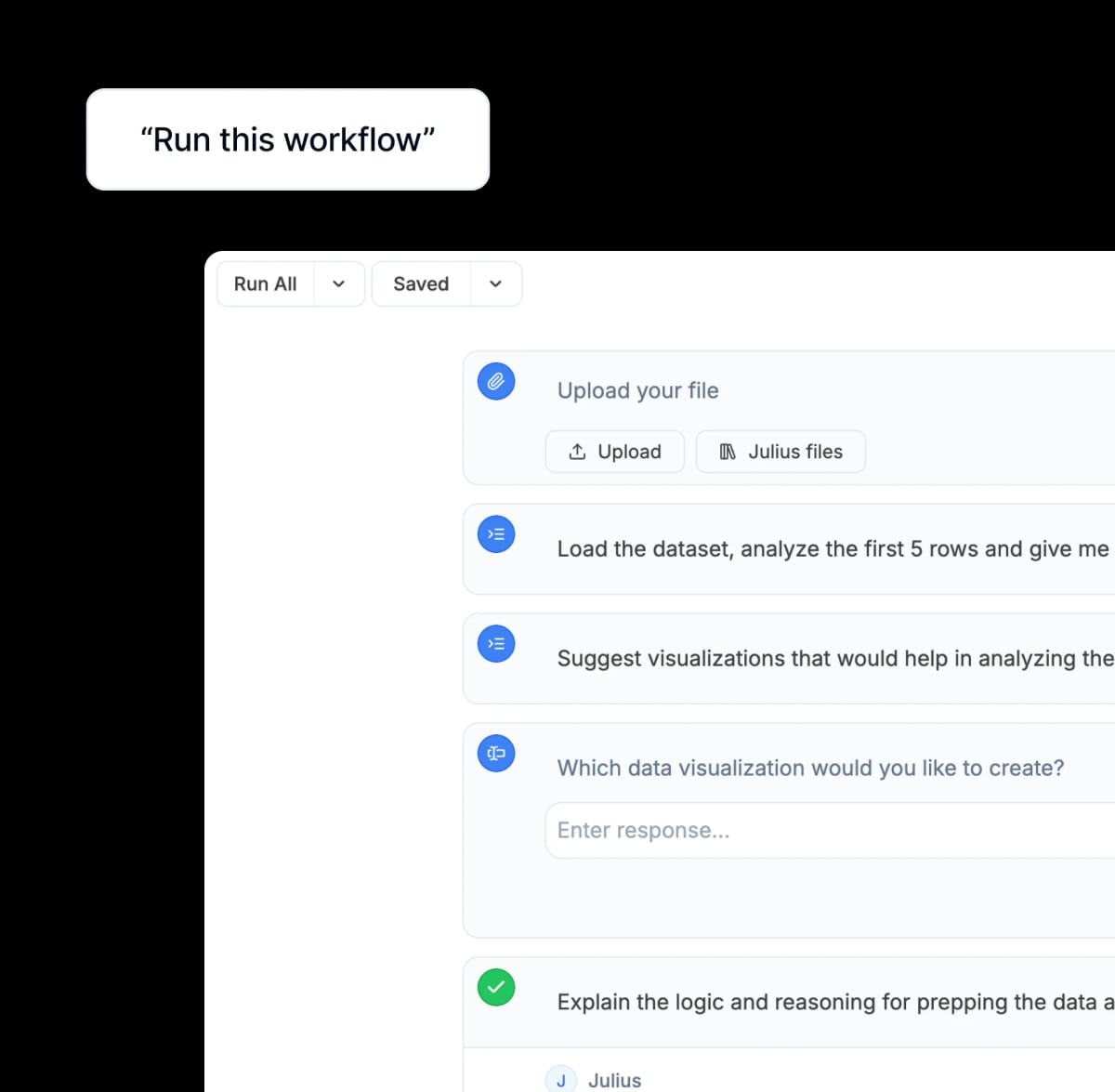
Collaborate and automate for greater team impact
Save time by automating repetitive tasks and streamlining workflows. Share them with your team to boost efficiency, reduce errors, and ensure everyone has access to the same up-to-date information.
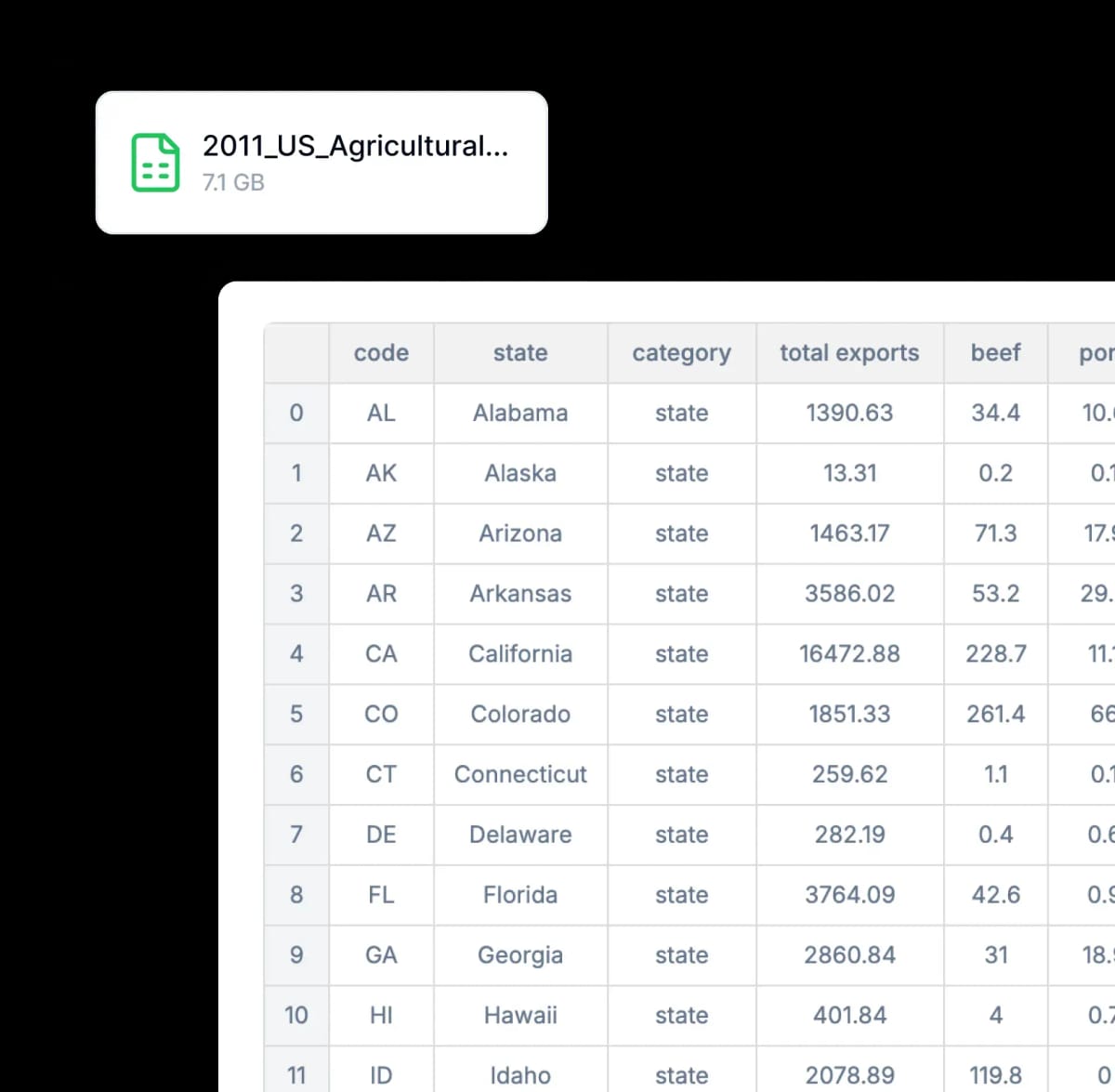
Store and handle any file size directly in Julius
Eliminate the worry of file limits or sluggish performance. Julius supports files up to 32GB and optimizes CPU and RAM usage, so your data stays in one place without compromising speed or reliability.
"You can use Julius for virtually any type of business or scientific data, or simply to categorize survey responses or interpret spreadsheets. It's remarkably versatile."

Frequently asked questions
What is the main difference between Julius AI and Deepnote for data analysis?
Julius is an AI-powered conversational tool that allows everyone from scientists to non-technical users to analyze data through natural language, while Deepnote is a collaborative Jupyter-style notebook that requires coding knowledge but offers extensive customization for data scientists .
Do I need coding experience to use Julius and Deepnote?
You don't need coding experience to use Julius as it operates through a conversational interface, where you can analyze your data using natural language but Deepnote requires at least basic knowledge of Python, R, or SQL to effectively utilize its notebook environment .
Can Julius AI read and analyze spreadsheets?
Yes, Julius AI specializes in spreadsheet analysis. It handles both single and multi-tab spreadsheets seamlessly, allowing you to reference specific tab names in your prompts for targeted analysis.
Julius can perform statistical operations, create visualizations, identify patterns, and generate insights from your tabular data. This capability makes it particularly valuable for business intelligence, financial analysis, and data-driven decision making across various industries and use cases.
Can I analyze spreadsheets with multiple tabs?
Yes! Upload your multi-tab spreadsheet as you would any other file. Once uploaded, you can refer to the individual names of the tabs in your prompts, and Julius will perform analysis on those tabs accordingly.
Can I generate data visualizations?
Yes, it's very easy to generate clean-looking data visualizations using Julius. Once you have uploaded your data, simply prompt the AI to create your desired chart or graph.
Is there a discount for students, professors, or teachers?
Yes! We offer a 50% discount to students and other members of academia. Just sign up, shoot us a quick email at team@julius.ai letting us know you're a student before subscribing, and we'll let you know how to apply the 50% discount to your account.
What is Julius’ data privacy policy?
We utilize strict access-control, as each user only has access to their own data in the secure notebook file storage — even our python code execution environments are sandboxed by user. In addition, your data is completely erased from the servers whenever you delete it within the app. You can read further into our data policies here.
Is Julius AI free?
Yes! By default all users can send up to 15 messages a month with our most advanced AI model. Once you hit the monthly limit, you can upgrade your plan in your Account page.
How do I link a data source?
You can link a data source on the My Files page or directly in our Chat interface . For more detailed instructions on linking a data source, check out our Julius Start Guide .
Don't just take our word for it...
"There's so much data in Athena—which websites AI models pull from, for which verticals, which geographies—you can drill down as deep as you want. But with so much data, it's like sitting in a boat on a lake. Julius is the fishing rod that helps us actually catch what we need."


"Julius completely changed how I approach growth. I can analyze multiple datasets at once and turn them into insights for customer acquisition, retention, and marketing campaigns, all without waiting on engineering or hiring data analysts. I've used it at two companies now, and it's saved us hours while helping us make smarter decisions every day."


"20 minutes using Julius AI daily gives me business insights typically reserved for large companies with dedicated data science teams. It's pretty unreal how this informs our decision-making."


"I'm big on data analysis (spreadsheets DAU!), but often find myself frustrated by errors and slowness in trying to even analyze a basic spreadsheet in ChatGPT. Julius is good at this, and has only gotten better over time. It's both very reliable and can generate helpful ideas for extra analysis as well as visualizations."


"Julius helped us get a clear view of the long-term trends in our NRR cohorts. The insights gave us a much better understanding of where we're headed—it's been super valuable for our finance planning."


"Since discovering Julius, I've been incredibly impressed with its reliability and ease of use. It feels like having a personal data analyst on demand. I use it multiple times a week and genuinely enjoy the experience."