OpenAI: GPT-5.6 Sol
The OpenAI model behind Julius 1.2 Max, paired with Julius tools for complex analysis.
Available on Pro, Max, Ultra, and Business. Compare plans
Reviewed · Sources
- Best suited to
- Complex analysis through Julius Max
- Published context
- 1,050,000 tokens
- Native inputs
- Text and images
- Released
- July 7, 2026
GPT-5.6 Sol pricing
Compare the provider’s API rates with access through Julius.
Prices in USD, reviewed October 13, 2026. API token charges are separate from Julius subscriptions and credits.
What is GPT-5.6 Sol?
GPT-5.6 Sol is an OpenAI model for complex professional work, with text and image input and a 1,050,000-token published context window. In Julius, it is used through Julius 1.2 Max.
Use this page to understand the underlying model, then choose Julius 1.2 Max for its agent experience. A model’s API specifications describe the model service; Julius adds its own instructions, tools, and credit accounting.
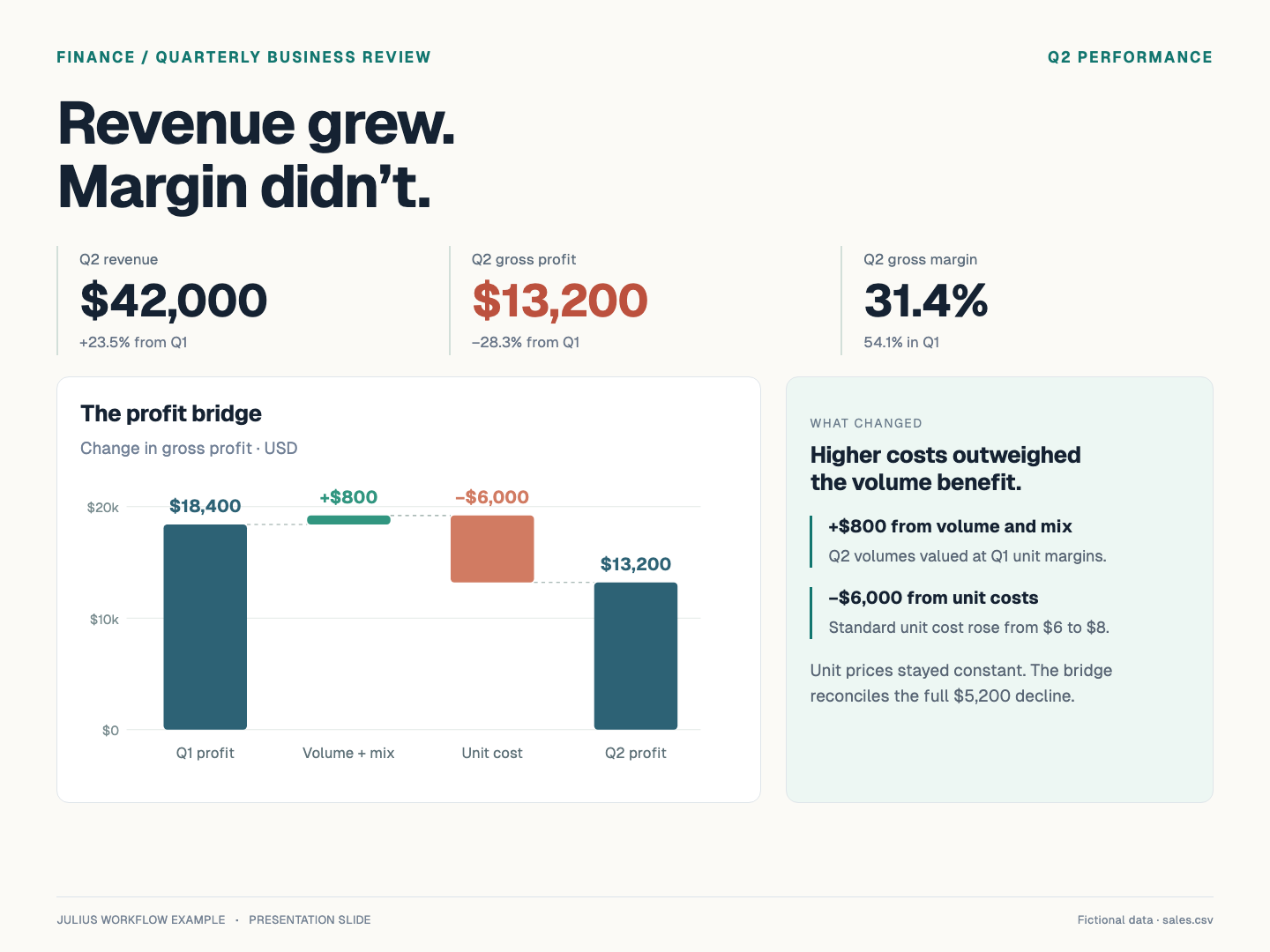
Explain why revenue rose while profit fell
A two-product business sold more in Q2. Why did it keep less of the revenue?
Worked example · Fictional sample data · Expected results calculated from the CSVs
1. Input
Quarterly sales and costs
2. Check
Separate volume, mix, and cost
3. Deliver
A reconciled profit bridge
View the prompt and sample data
Calculate revenue, gross profit, and gross margin for each quarter. Reconcile the gross-profit change into a volume/product-mix effect using Q1 unit margins and a unit-cost effect using Q2 volumes. Create a clear chart and a short management memo. State the assumptions; do not infer causes that are absent from the data.
sales.csv
quarter,product,units,unit_price,unit_cost
Q1,Standard,1000,10,6
Q1,Premium,800,30,12
Q2,Standard,3000,10,8
Q2,Premium,400,30,12
These expected results come from the downloadable Python calculations. This example illustrates a workflow; it is not a measured benchmark of GPT-5.6 Sol.
Using GPT-5.6 Sol in Julius
Start with your task
The try buttons carry Julius 1.2 Max into a new chat when your plan includes it. Example buttons also fill the composer with the sample data. Review the prompt, or replace it with your own files and question, before sending.
If the model is unavailable on your plan, Julius explains the access requirement. You can choose another option in the model menu.
Know the boundaries
- The “gpt” choice in Julius refers to GPT-6 Astra, not GPT-5.6 Sol. Choose Julius 1.2 Max for the experience described here.
- The published context window is not a promise that Julius will send a whole uploaded file directly to the model. Files may be handled with tools.
Model details and official research
Go to the original documentation for specifications, release details, and evaluation methods.
GPT-5.6 Sol: frequently asked questions
Is GPT-5.6 Sol available on Julius?
How much does GPT-5.6 Sol cost?
How do I use GPT-5.6 Sol in Julius?
Explore other models and research
Read the details, compare tradeoffs, and find another model for your work.